Every stone conversation eventually arrives at the same fork: natural stone or manufactured veneer. The marketing on both sides is unhelpful, so here is the version we give people across the counter.
The honest comparison
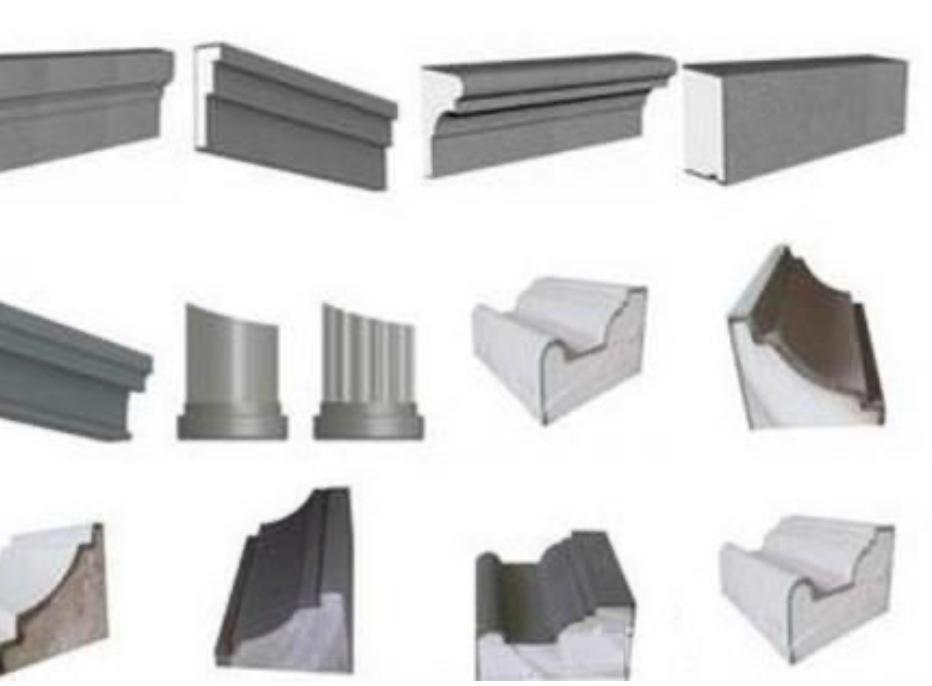
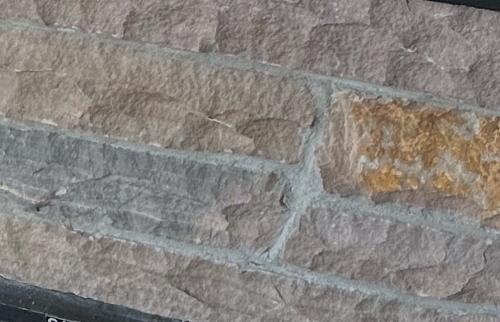
Manufactured stone veneer — sometimes called cultured stone — is a concrete product cast in moulds taken from real stone, with pigment added during manufacture. Natural thin veneer is real stone, quarried and cut down to a thickness that can be applied to a wall without structural support.
Manufactured is lighter, cheaper, more uniform and easier to install. Natural is heavier, costs more, varies piece to piece, and lasts essentially forever. Neither of those lists is a verdict. Which one is right depends almost entirely on which wall you are putting it on.
How colour behaves over time
This is the difference that matters most and gets discussed least.
In natural stone, the colour is the stone. Chip it, and the fresh face is the same material. In manufactured veneer, pigment is concentrated at the surface. Chip it and you find grey concrete underneath.
Over years of UV exposure that surface layer fades, and it fades unevenly — the south and west elevations go first while the north wall stays close to original. On a house in White Rock or West Vancouver with long sun exposure on one face, that difference becomes visible well before the material has any structural problem.
The failure mode for manufactured stone is almost never structural. It is that the wall stops matching itself.
Porosity and our rain
Many natural stone cladding products are less porous than the concrete used in manufactured veneer. In a climate that delivers rain for months at a stretch, lower porosity means less water taken up, less to release, and less opportunity for freeze-thaw damage at exposed edges.
At sea level in Richmond, Delta or Vancouver, freeze-thaw cycling is mild and this matters less. Higher up — parts of Coquitlam, Port Moody, Maple Ridge and the North Shore — you get more genuine freeze-thaw, and the gap between the two materials widens.
The thing that matters more than either material
A drained cavity behind the cladding does more for longevity than any choice between stone types. BC requires a 10 mm capillary break behind cladding on most Lower Mainland projects — see our guide to the rainscreen requirement. Beautiful stone on a badly built wall still fails.
Weight, cost and installation
Natural thin veneer is heavier. On new construction that is rarely an issue. On a retrofit — cladding over an existing wall on a 1970s house in Burnaby or North Vancouver — the substrate and any required lintel support genuinely need checking before you commit.
Installation labour is comparable, with one caveat: manufactured stone is easier to lay badly. Because pieces repeat, an installer who works straight out of the crate produces visible pattern repetition across the wall. Good installers pull from several crates at once and deliberately mix. Ask about this before hiring.
When manufactured stone is the right call
Genuinely often. Specifically:
- Protected elevations — under deep overhangs, on covered entries, in breezeways, where UV and rain exposure are both low.
- Large secondary walls where the budget is real and the wall is not what anyone looks at.
- Interior applications — fireplace surrounds, feature walls. Indoors, most of the durability argument evaporates and manufactured stone is an easy yes.
- Weight-constrained retrofits where natural stone would mean structural work.
What we would specify
For a typical Lower Mainland house, the split we most often end up quoting is natural stone on the entry, columns, and any surface within arm’s reach, with manufactured veneer on larger, more protected elevations. You spend the money where it is seen and touched, and where the weather is hardest.
What we would not do is put manufactured veneer on a fully exposed west wall and expect it to look the same in fifteen years as the sheltered north side. That is the one combination that reliably disappoints.
Bring photos of the elevation in daylight, and if you can, come and see both materials wet. Most stone showrooms — ours included — will hose down a sample for you, because stone that looks warm and dry under showroom lighting can sit grey for most of a Lower Mainland winter.